Activated Carbon
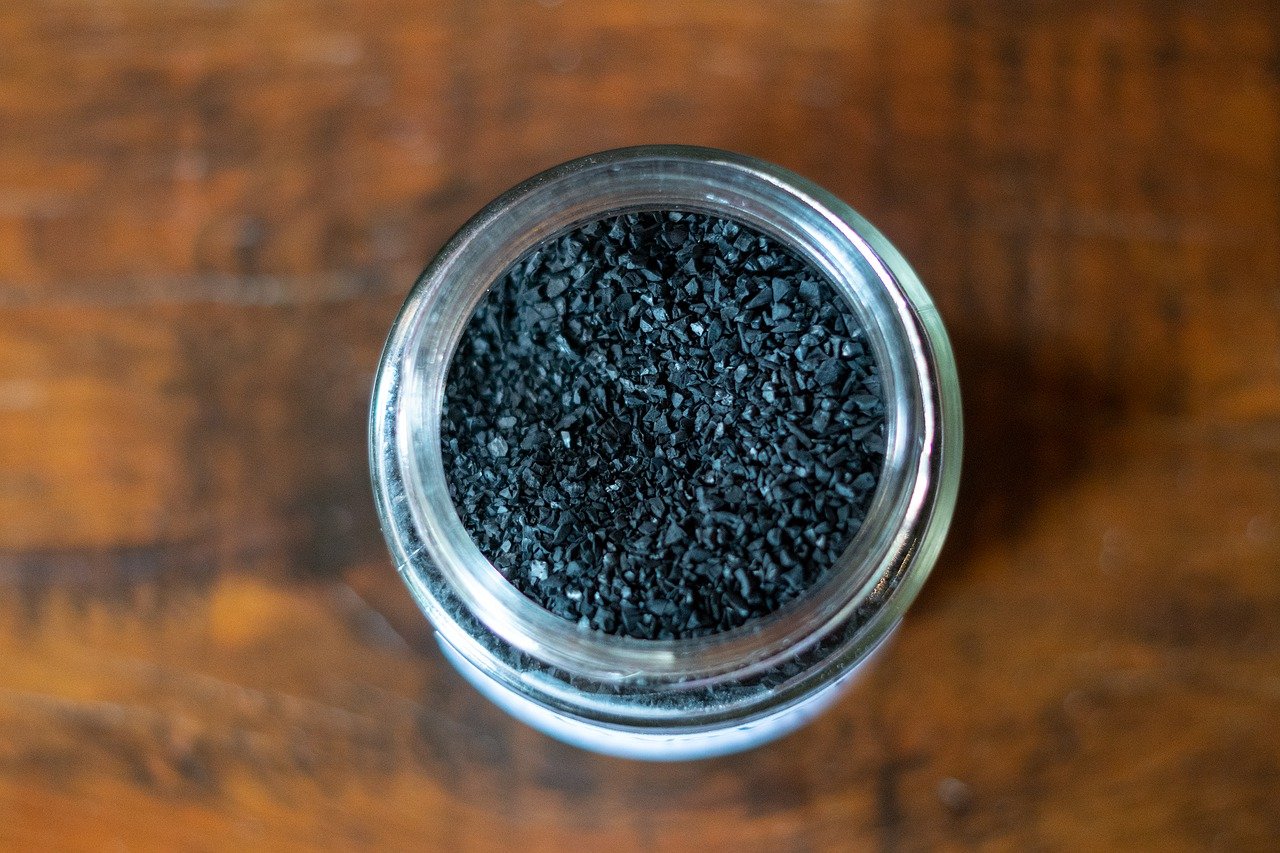
- Also known as activated charcoal, a form of carbon commonly used to filter contaminants from water and air.
- It is processed to have small, low-volume pores that increase the surface area available for adsorption or chemical reaction.
- High degree of microporosity, one gram of activated carbon has a surface area in excess of 3,000 m2.
- Usually derived from carbonaceous materials.
Activated carbons are complex products, classified for general purposes based on their size, preparation methods and industrial applications such as
- Granular activated carbon
- Extruded activated carbon
- Bead activated carbon
- Impregnated carbon
- Polymer coated carbon
- Woven Carbon
It is produced from carbonaceous source materials such as bamboo, coconut husk, willow peat, wood, coir, lignite, coal and petroleum pitch. It can be produced (activated) by one of the following processes.
Physical Activation: The source material is developed into activated carbon using hot gases. Air is then introduced to burn out the gases, creating a graded, screened and de-dusted form of activated carbon through carbonization/ activation/ oxidation.
Chemical Activation: The carbon material is impregnated with certain chemicals such as an acid, strong base or a salt. The carbon is then subjected to high temperatures (250–600°C) for activation process.
Global warming potential of activated carbon (AC) produced from non-renewable resources such as fossil fuels is approximately 18.28 kg CO2e/kg, AC made from biochar has 8.60 kg CO2e/kg, AC made from wood waste has GWP of 10.95 kg CO2e/kg. Therefore, utilizing local residual biomass as a raw material for AC production should be the preferred option.
Activated carbon is used in methane and hydrogen storage, air purification, capacitive deionisation, solvent recovery, decaffeination, gold purification, metal extraction, water purification, medicine, sewage treatment, air filters in respirators, filters in compressed air, teeth whitening, production of hydrogen chloride and many other applications.
Carbon adsorption has numerous applications in removing pollutants from air or water streams both in the field and in industrial processes such as spill cleanup, groundwater remediation, drinking water filtration, air purification, VOC capture, measurement of radon concentration in air, VOC recovery from flexible packaging, converting, coating and other processes.
In livestock production it is used as a pesticide, animal feed additive, processing aid, non-agricultural ingredient and disinfectant. In organic winemaking, activated carbon is allowed for use as a processing agent to adsorb brown color pigments from white grape concentrates. It is also used as biochar.
The absorbing aspects of activated charcoal have made it a popular additive in many skin care products. Products such as activated charcoal soaps, activated charcoal face masks and scrubs combine the use of the charcoal's absorption ability along with the cleansing ability of soap.