Areca Palm
- Areca palm trees are abundantly found in peninsular India.
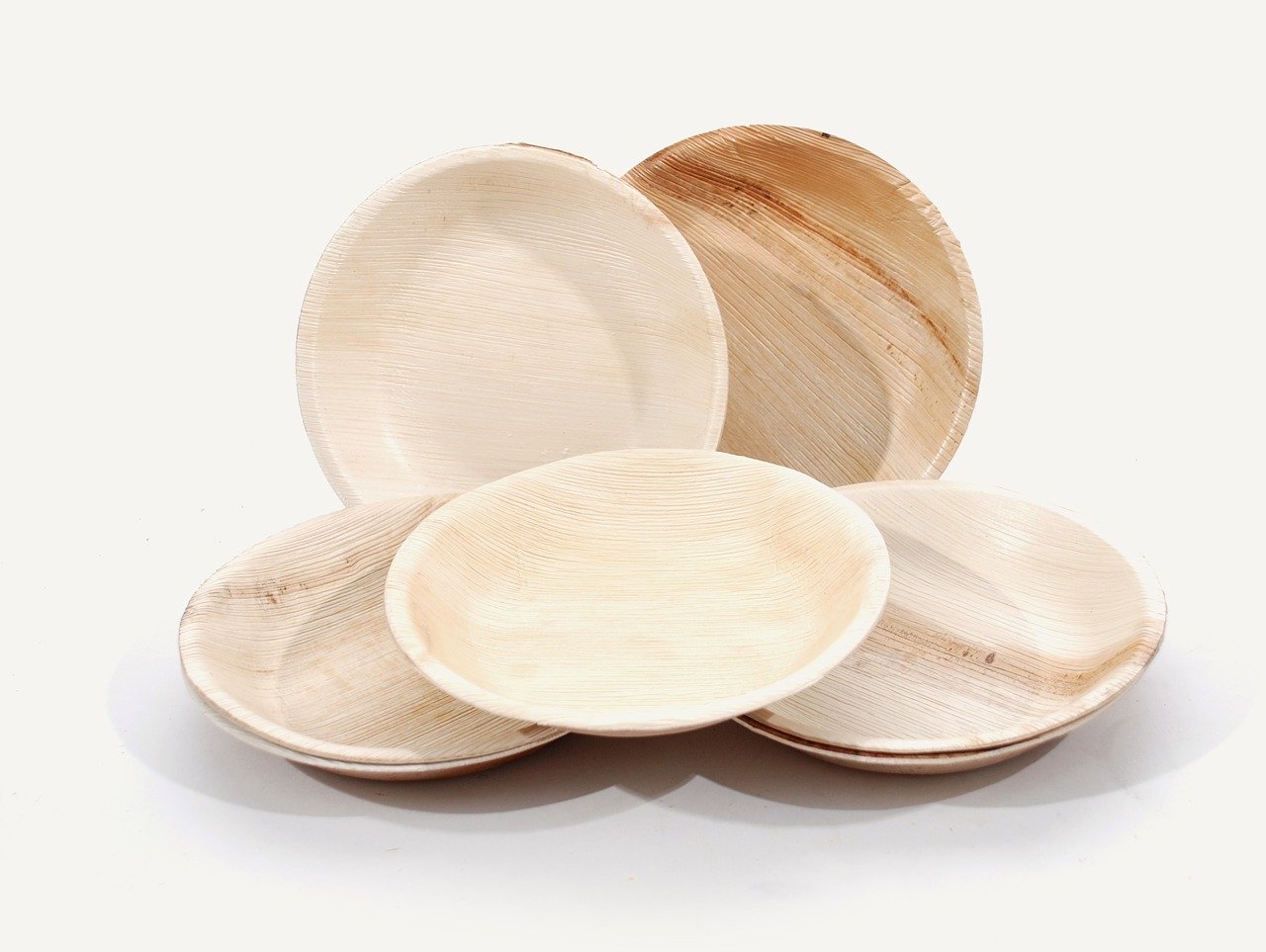
- Finds use in furniture, roofing, kitchen and tableware, ornaments, soft boards, medicine.
Arecanut: Seed of areca plant, used for consumption.
Tannin: Obtained as a by-product from the process of preparing immature betel nuts for masticator purposes. Used for dyeing clothes and tanning leather. It can be used as an adhesive in ply board manufacture and as a safe food coloring agent.
Fats: The areca nut contains 8-12 % fat. It can be made edible by refining it using soda lime and can be used in preparation of many food products.
Husk: Outer cover of the areca fruit, used as an inferior fuel, mulching and in manure. Fiber content of husk can be used for making such items as thick boards, fluffy cushions and nonwoven fabrics. Plastic and hard boards of satisfactory strength and water repellent material can be made from areca husk. It can also be used in preparing boxes, cushioned envelops, soft boards, pillows and beds. Activated carbon can also be made from areca husk. It also can be used as raw material for preparing ready-made toys, flowers, garlands and ornaments.
Areca’s ripened nut is astringent and is used in veterinary practice as a vermicide. It is also used in the treatment of humans for leucoderma, leprosy, cough, fits, worms, anaemia and obesity. Areca nut is recommended as an ointment for the treatment of nasal ulcer along with other ingredients. Arecoline contents of areca nut are used in an antisnoring composition, which is formulated into gargles and tablets.
Used to construct temporary sheds and tents. It is used as reaper in houses roofed with tiles. It is used in manufacturing furniture like chairs, tables and sofas.
Hygienic, non-odorous, non-toxic, light weight plates and cups made out of areca leaf are environment friendly and an economical disposable alternative for all catering occasions. Areca leaves that naturally fall from the areca tree are collected from the forest floor without cutting trees. These collected leaves are put through cleaning, heat pressing, cutting, edge trimming and sterilisation before delivering to the market.